Expertise,
Engineered.
Financial theory, codified as systematic rules in a proprietary execution engine.

Institutional-grade financial modelling for boards, investors and lenders. Advisory-driven. Technology-enabled.
Financial theory, codified as systematic rules in a proprietary execution engine.
C-suite operating experience, translated with quantitative discipline into deterministic financial logic.
Accounting, legal and regulatory compliance for corporate transactions, built into the model's architecture.
Designing driver-based financial models and governance frameworks for executive decision-making.
Assessing debt capacity, capital structure and financing alternatives to support lender engagement.
Building transaction models for business and asset valuation, deal structuring and M&A scenario analysis.
Developing financial models for distressed situations, debt renegotiation and turnaround execution.
Methodological review of existing financial models and business plans, including structural rebuilds where required.
Twelve selected engagements across planning, M&A and valuation, treasury and restructuring. Select a credential to read it in full; the archive of 26 also covers growth finance and venture scaling.
 CS-06M&A & ValuationTarget operating footprint design, value chain role allocation, and net synergy valuation ahead of a strategic industrial combination.Diversified Industrial Manufacturing€160M – €280M (Combined Revenue)
Two European industrial manufacturers evaluated a business combination to capture manufacturing scale economies, resolve capacity imbalances, and rationalise overlapping production plants across regional markets.
Built a bottom-up pre-deal industrial simulation model mapping plant-by-plant capacity utilisation, conversion cost per machine-hour, logistics lanes, and landed costs to design the target manufacturing footprint (defining specialised centre-of-excellence plants, regional assembly hubs, and facility closures); reallocated value chain stages (upstream component machining vs. downstream assembly and centralised procurement/R&D) to optimise transfer margins and working capital turns; and quantified risk-adjusted run-rate cost synergies (direct material volume rebates, SG&A deduplication, fixed overhead absorption) and cross-selling revenue synergies (net of cannibalisation), discounted against phased one-off implementation cash outflows (severance, equipment relocation, plant decommissioning, IT/ERP harmonisation, and safety-stock build-ups during production transfers).
 CS-07M&A & ValuationOperational and financial carve-out of a manufacturing division with entangled shared services and intercompany dependencies.Industrial Equipment & Components€120M – €220M (Carve-Out Revenue)
A diversified industrial conglomerate divested a non-core division operating across four legal entities with commingled ERP ledgers, shared procurement contracts, and centralised treasury functions.
Constructed standalone historical and projected carve-out financial statements (IAS/IFRS), engineered Transition Service Agreements (TSAs) with cost-plus markups, segregated working capital perimeters, and modelled Day-1 standalone corporate overhead to support Vendor Due Diligence and SPA locked-box mechanisms.
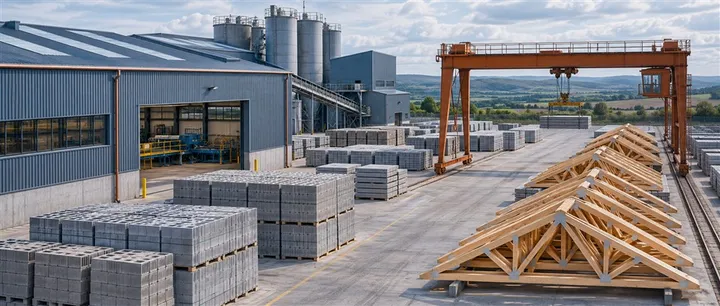 CS-09M&A & ValuationInstitutional LBO and multi-target M&A roll-up architecture for a sponsor-backed buy-and-build platform.Industrial Services & Maintenance€70M – €140M (Platform Enterprise Value)
A private equity fund executing a fragmented sector consolidation needed a unified underwriting model capable of simulating sequential bolt-on acquisitions, multiple arbitrage, and syndicated debt capacity.
Engineered a dynamic FAST-compliant LBO and consolidation model incorporating acquisition debt tranches (Term Loan A/B, RCF, vendor loans), cash sweep mechanics, purchase multiple arbitrage, and sensitivity matrices on exit multiples and leverage covenants.
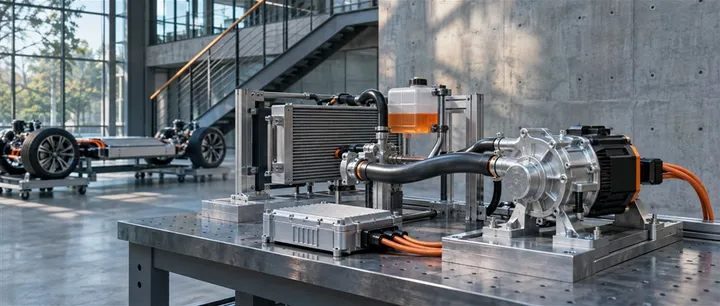 CS-17RestructuringDebt restructuring involving super-senior new money, debt-to-equity swaps and intercreditor agreements.Automotive Tier-1 Supplier€180M – €300M (Total Debt Exposure)
A highly leveraged manufacturing group faced an unsustainable debt maturity wall across bilateral bank lines, private debt funds, and bondholders following a severe supply-chain margin shock.
Modelled a multi-tranche capital structure waterfall allocating liquidation vs. going-concern enterprise value across creditor classes, structuring super-senior priority financing, PIK-toggle instruments, and Participating Financial Instruments (SFP) under a formal restructuring framework.
 CS-04FP&A & Working CapitalRelease of trapped cash across inventory, receivables, and payables via structural process and contractual levers.Industrial Machinery & Equipment€110M – €190M (Consolidated Revenue)
An industrial machinery group experienced rising net working capital absorption due to long lead-time components, aged inventory build-up, and elongated customer payment terms.
Diagnosed NWC drivers by entity and aging bucket, established SKU-level safety stock and slow-moving obsolescence write-down rules, introduced supplier payment-term harmonisation and vendor-managed inventory (VMI) mechanics, and tied working capital KPIs to operational cash conversion targets.
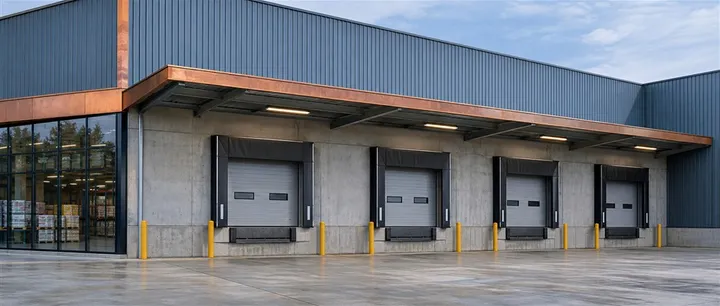 CS-21RestructuringNet present value optimisation of a manufacturing footprint consolidation and plant closure programme.Metallurgy & Heavy Manufacturing€100M – €180M (Group Revenue)
Structural overcapacity and margin erosion in a legacy European facility required evaluating full plant decommissioning and production transfer against prolonged operating losses.
Built a granular cash-flow comparison model weighing wind-down costs—severance liabilities, environmental remediation, supplier contract termination penalties, and inventory write-downs—against asset liquidation proceeds, tax shields, and steady-state margin accretion at receiving plants.
 CS-03FP&A & Working CapitalGranular EBITDA variance attribution separating commercial, operational, and mix effects.Packaging€80M – €200M (Revenue)
An industrial packaging group experienced unexplained margin compression despite stable top-line volumes, with board reporting failing to isolate plant-level inefficiencies from pricing concessions.
Overhauled the executive board pack by implementing a multi-dimensional EBITDA bridge (waterfall) model to isolate price, volume, product mix, and raw material pass-through variances across distinct cost and profit centres.
 CS-05FP&A & Working CapitalMargin recovery, tail-catalog rationalisation, and multi-channel re-pricing across a complex automotive parts portfolio.Automotive Components / Aftermarket & OEM€60M – €140M (Revenue)
An automotive components manufacturer faced severe gross margin dilution across thousands of active SKUs spanning OEM, OES, and Independent Aftermarket (IAM) channels, driven by uncalibrated historical price lists, low-velocity tail references, and unmonitored commercial rebates.
Built a granular SKU-level profitability engine combining Activity-Based Costing (allocating machine setup times, tooling amortisation, scrap rates, and batch logistics) with ABC-XYZ volume/volatility segmentation; identified value-destroying tail SKUs for phase-out, EOL (End-of-Life) last-time-buy pricing, or strict Minimum Order Quantity (MOQ) surcharges; and engineered a multi-tier re-pricing matrix incorporating raw material/energy indexation pass-throughs, cross-channel price-corridor governance, elasticity-based price increases on captive replacement parts, and net-net pocket-price waterfall controls.
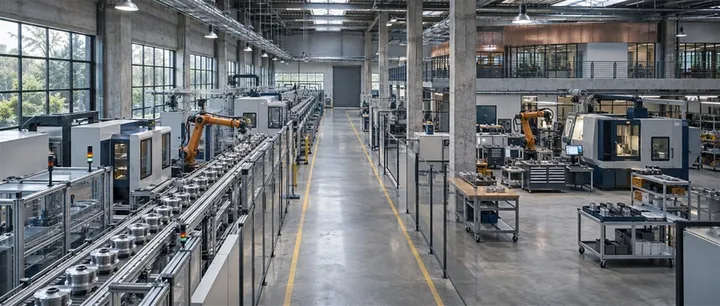 CS-08M&A & ValuationFair value valuation of acquired intangible assets and multi-CGU impairment testing framework post-acquisition.Specialty Chemicals€90M – €160M (Deal Enterprise Value)
Following a cross-border leveraged buyout, the acquiring group required an auditable Purchase Price Allocation under IFRS 3 and a defensible goodwill impairment framework for statutory auditors.
Valued customer relationships (Multi-Period Excess Earnings Method - MPEEM), proprietary technology (Relief-from-Royalty), and order backlogs, reconciling weighted average return on assets (WARA) against WACC and IRR, and establishing Cash-Generating Unit (CGU) DCF models under IAS 36.
 CS-13Capital Structure & TreasuryCentralised zero-balancing cash pooling and dynamic FX/commodity exposure hedging across international subsidiaries.Industrial Machinery & Export€200M – €350M (Consolidated Revenue)
A rapidly internationalising industrial group suffered from trapped liquidity in foreign subsidiaries, uncoordinated local overdrafts, and severe EBITDA volatility driven by USD/EUR and raw material fluctuations.
Implemented a physical cross-border Zero-Balancing Account (ZBA) cash pooling structure, built a rolling multi-currency net exposure engine mapping commercial backlog to financial derivatives, and instituted a formal treasury hedging policy governing forward contracts and zero-cost collars.
 CS-14Capital Structure & TreasuryTransfer pricing architecture based on the OECD guidelines, with IP migration, for a multinational industrial group.Precision Engineering & Robotics€150M – €280M (Consolidated Revenue)
An expanding international group faced audit exposure and tax leakage due to misaligned profit allocation between its domestic R&D/manufacturing headquarters and foreign commercial subsidiaries.
Conducted a functional and risk analysis (DEMPE framework) to reclassify foreign units into Limited Risk Distributors (LRDs) and contract manufacturers, built transactional net margin (TNMM) benchmark models, and integrated automated intercompany margin-adjustment mechanisms into the group ERP consolidation engine.
 CS-18RestructuringAttested turnaround plan (Piano Attestato), senior debt rescheduling and majority-preserving equity injection.Heavy Industry / Plant Engineering€50M – €80M (Enterprise Value)
A capital-intensive plant engineering group faced severe financial distress and over-leverage, requiring a formal, attested recovery plan to restore financial balance without diluting founder control.
Formulated a multi-year industrial and financial turnaround plan under the Italian attested recovery plan regime (Piano Attestato di Risanamento, art. 56 CCII), modelling debt rescheduling tiers, standstill agreements, and a structured institutional capital increase that preserved founding shareholders’ majority governance.
COASE MCP Knowledge Layer
The versioned knowledge repository behind COASE financial models. It binds statutory, accounting and market sources to Partner-approved rules and controls, served through MCP. Calculation stays in controlled models.
Knowledge Layer in detail →Execution Engine
Our proprietary tools automate time-consuming tasks and high-volume workloads across data preparation, model construction and reporting.
All modules in detail →Primary sources
COASE expertise
Knowledge LayerTyped knowledge graph · immutable releases
Execution · client-isolated
Both are used by COASE inside its mandates. Neither is sold as a software licence.
Scope and approach are defined collaboratively when the requirement is still emerging.
Where you start
You know the intended outcome but have not yet defined the full scope.
What follows
For when the requirement still has to be defined. It is agreed in stages and ends once the brief is clear; the build then continues as a defined-scope engagement.
A specified service with scope, timetable and fee agreed before work begins.
Where you start
You know which model, plan or review you require.
What follows
Every service in the catalogue can be bought this way: configure it, and scope, timing and fee are set before work begins.
Specialist financial planning and analysis capacity retained for an agreed number of days each month.
Where you start
You need specialist capacity on an ongoing basis.
What follows
Works on its own, when a finance team needs specialised capacity, or follows a mandate to keep models and reporting running.
For enquiries about a mandate, indicate the subject, the material already available and the advisers involved. The scope of the modelling and analysis is then agreed with your team.